
Indiana is not typically the state that comes to mind when people think about cutting-edge technology adoption, but that perception misses something real about how everyday commerce has been changing across the state. From the coffee shops and boutiques of Broad Ripple to the farm supply stores in rural Tippecanoe County, from the food halls of downtown Indianapolis to the family-owned hardware stores that anchor small town main streets, the way Hoosiers pay for things has shifted substantially and continues to shift. Contactless payments Indiana businesses are adopting are not a coastal trend trickling reluctantly into the Midwest.
They represent an effective solution to consumer expectations and business efficiency requirements. While the pandemic sped up behavioral shifts, the practices developed throughout that time period have turned out to be sticky enough to compel business owners in Indiana to invest in new payment technologies regardless of any prior plans to do so. Recognizing the current stage of development in Indiana, identifying factors behind that process, and analyzing potential outcomes for various types of businesses can be helpful not only for decision-making by entrepreneurs, but also for comprehending changes in the commerce of Indiana, which may not necessarily reflect its reputation as an agriculture-driven economy.
The State of Payment Technology Adoption in Indiana
Indiana’s payment technology landscape reflects both the urban-rural divide that characterizes the state’s geography and the genuinely broad-based behavioral shift toward digital payment methods that has occurred across demographics and income levels. Indianapolis, as the state’s dominant metropolitan economy with over two million people in the greater metro area, has adopted contactless payment infrastructure at a pace comparable to other major Midwest cities.
The restaurant, retail, and entertainment districts of the city have largely completed the transition to NFC-capable terminals, and tap to pay IN these urban environments has become the default expectation of a significant proportion of customers who navigate these spaces daily. The secondary cities of Fort Wayne, South Bend, Evansville, and Bloomington each reflect their own economic character in how payment adoption has proceeded. College towns like Bloomington and West Lafayette, shaped by younger resident populations and businesses that cater to students and faculty, have been relatively early adopters of both contactless payment infrastructure and digital wallet acceptance.
In manufacturing cities such as Fort Wayne and Kokomo, in which the consumer demographics include a large number of adults who were used to paying bills without having access to smart phones, the change has been slower to take place. However, they too have undergone the same trend. Rural Indiana represents the area where we see the most complicated situation in terms of adoption of the payment system due to low population densities, older age profiles in many regions, and lack of broadband in some locations.
Tap to Pay: From Novelty to Expectation
The evolution of tap to pay IN from a technology curiosity to a genuine customer expectation has happened faster than most Indiana business owners anticipated when they first considered investing in NFC-capable payment terminals. The transition was not driven primarily by business decisions to offer a better payment experience, though that motivation has certainly been present among forward-thinking operators. It was driven more fundamentally by the shift in what customers arrived at the counter already expecting to be able to do.
A customer who taps to pay for their morning coffee, their grocery run, their lunch, and their gas in the same day without ever reaching for a physical card or cash is a customer who experiences genuine inconvenience when a business cannot accommodate their preferred payment method. This expectation dynamic has created what amounts to a competitive floor for payment technology in most Indiana retail and food service environments.
Companies who have offered cash and chip card transactions exclusively for the past five years without any customer resistance have now found themselves in a changed landscape, where the lack of contactless payments can be observed by customers. For many merchants in Indiana who have decided to invest in NFC-enabled devices, this decision is not based on the idea of developing some sophisticated strategy in regards to their company’s technological adoption, but simply the need to stay competitive by not letting customers go to other companies who offer better services. Contactless payments that Indiana businesses adopt at POS have been defined by their owners as simply “keeping up” with other companies, and not “getting ahead.”
Digital Wallets and the Indiana Consumer
Digital wallets Indiana business owners encounter at their registers include the major platforms that dominate nationally, Apple Pay and Google Pay, as well as bank-specific digital wallet implementations that Indiana’s financial institutions have deployed for their customers. The adoption patterns for these digital wallets vary significantly by demographic, with younger consumers disproportionately likely to have set up and actively use a digital wallet for everyday purchases. This demographic pattern has important implications for Indiana businesses whose customer base skews younger, including bars and restaurants in college towns, entertainment venues, fitness businesses, and retail categories popular with younger shoppers.
For these businesses, digital wallet acceptance is not just a convenience feature but a genuine expectation of the core customer demographic, and the absence of it creates a friction that their competitors who have implemented it do not create. The practical experience of accepting digital wallet payments through existing NFC-capable terminals is simpler than many Indiana business owners expected when they first investigated the option.
The vast majority of current terminals that support contact payments will also support both Apple Pay and Google Pay without an extra investment in additional hardware due to the fact that all three payment systems rely on the NFC technology protocol. The setup will likely not require any effort from the store owner, as the processing partner will take care of that part; this means that providing access to digital wallet payments in Indiana stores will not require much effort at all.
QR Code Payments and Their Place in Indiana Commerce
While NFC-based tap to pay solutions have dominated the contactless payment conversation in most Indiana markets, QR code-based payment methods have found specific applications in the state’s commerce landscape that are worth understanding as part of the complete picture of payment modernization. QR code payments operate differently from NFC: rather than a device-to-terminal radio communication, they involve the customer scanning a displayed code with their phone camera to initiate a payment through their banking or payment app.
This approach has particular advantages in environments where dedicated payment terminal infrastructure is less practical, including outdoor markets, pop-up retail events, food trucks, and the direct-to-consumer farm sales that are common across Indiana’s agricultural communities. The Indiana farmers market scene, which operates in cities and towns across the state from spring through fall, has seen meaningful adoption of QR code payment capabilities among vendors who need to accept digital payments in settings where traditional terminal infrastructure is either unavailable or impractical to set up and break down at each market.
A local farmer offering produce at Indianapolis City Market, Carmel Farmers Market, or any of the many farmers markets throughout the state will only need to offer a QR code to allow the customer, who has stopped using cash payments, to pay for the product without significant capital expenditures or connectivity issues like those experienced by some card terminals. Cashless payment systems that use QR codes as one of the many methods available to customers are reaching the customer in the most logical place in terms of their preferred form of payment.
Rural Indiana and the Digital Payment Divide
Any honest account of cashless and contactless payment trends in Indiana has to grapple with the genuine divide between the state’s urban and rural communities in terms of both payment infrastructure adoption and the practical feasibility of fully cashless operations. Rural Indiana encompasses communities with very different characteristics from each other, ranging from prosperous exurban towns that have grown as Indianapolis has expanded to genuinely remote agricultural communities where the local economy has contracted for decades and where demographic aging has produced customer bases with different payment preferences and comfort levels than urban consumers.
The infrastructure challenge is real in parts of rural Indiana where broadband internet access remains unreliable and where cellular coverage can be inconsistent. Payment terminals that depend on continuous internet connectivity can be a practical liability for businesses in these areas, where a connectivity gap in the middle of a transaction creates a customer experience problem that undermines the appeal of the technology investment. Contactless payments Indiana businesses in rural markets increasingly use terminals with offline capability that can process transactions locally and batch-settle when connectivity is restored, which addresses the reliability concern without requiring the business to forgo the operational benefits of modern payment technology.
The demographics factor in terms of rural Indiana adoption of payment is no less critical. In those places where the average age of the clientele is higher, there are sizable numbers of clients who are not only unaware of digital wallet transactions but also skeptical about such means of payments because of issues with security, lack of knowledge about the technology, or simply because they prefer the concrete form of cash payments. The establishments operating in these regions must make the move towards cashless stores carefully, ensuring they retain the advantages of accepting cash while providing a digital alternative for an increasing number of clients.
The Business Case for Contactless Payment Investment
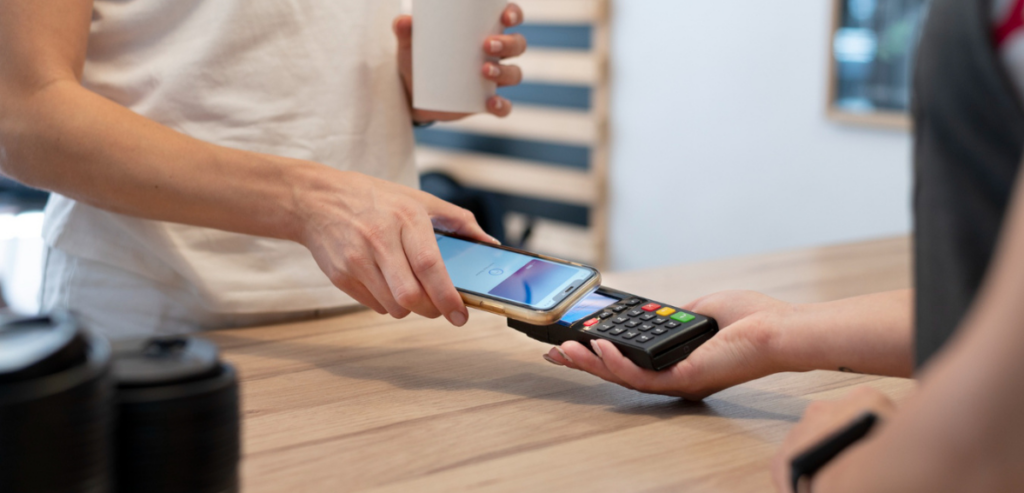
For Indiana businesses at various stages of their payment technology journey, the business case for investing in contactless payment infrastructure rests on several pillars that collectively produce a return on investment that most business owners who have made the transition describe as justified in retrospect. Transaction speed is the most immediately visible operational benefit. A contactless payment transaction completes in two to four seconds, compared to fifteen to thirty seconds for cash and ten to twenty seconds for chip card insertion with PIN entry.
For businesses with meaningful customer volume, particularly during peak service periods, this reduction in transaction time translates into throughput improvements that are visible in the number of customers served per hour and in the reduction of queue lengths that can otherwise deter potential customers from entering the store. Hygiene considerations that became prominent during the pandemic remain relevant for a meaningful proportion of customers who have retained a preference for payment methods that minimize physical contact with shared surfaces.
The use of tap to pay IN and digital wallets is an approach that addresses the needs of such consumers in a way that swipe and cash transactions do not. In addition to reducing the amount of cash transactions made, there are benefits to this change that Indiana merchants will benefit from in terms of less cash shortages, less cash overages, and less reconciliation at the end of shifts. There are also savings in the logistical effort required to make cash deposits at banks.
Payment Technology and Indiana’s Small Business Ecosystem
The small business ecosystem that forms the backbone of Indiana’s local economies across its communities is the segment where payment technology decisions have the most direct impact on competitiveness and customer experience. Indiana’s independent retailers, restaurants, service businesses, and specialty food operators are the businesses that most frequently face the decision of whether and how to upgrade their payment infrastructure, and they make these decisions in the context of tight margins, limited IT support, and the competing demands of day-to-day operations.
The payment technology market has become substantially more accessible to small businesses in Indiana over the past several years, as the competitive landscape among payment processors and POS providers has driven down hardware costs, simplified implementation processes, and made the economics of NFC terminal adoption more favorable than it was when the technology was newer and more expensive. Many Indiana small business owners report that the conversation with their existing payment processor about upgrading to contactless-capable hardware was straightforward and that the cost difference was smaller than they had anticipated.
Digital wallet types that Indiana business owners can start accepting with minimal extra cost after having the NFC terminal installed have basically increased the payment options that customers have access to without the need for buying any further hardware apart from what was needed to upgrade to the contactless cards. Moreover, it takes very little effort on the part of small business owners to train their employees in using the contactless payment option since the process is actually less complicated than regular payments, not more.
Large Retailers and Franchise Operations in Indiana
The large retail chains, franchise operations, and grocery networks that operate across Indiana have generally been earlier and more comprehensive adopters of contactless payment technology than independent businesses, both because their corporate technology standards have pushed adoption and because their transaction volumes make the operational benefits of faster contactless payments more immediately visible in measurable throughput and customer satisfaction metrics.
Major grocery chains operating throughout Indiana, including Kroger, Meijer, and various regional chains, have completed the transition to contactless-capable checkout infrastructure at essentially all of their Indiana locations, and their mobile payment options including their own loyalty app payment features have contributed to the normalization of non-cash payment among Indiana consumers. Franchise restaurants, convenience store chains, and national retailers have similarly deployed contactless payment infrastructure as part of corporate-standard POS implementations that Indiana franchisees are required to maintain.
This corporate-driven adoption has had a spillover effect on consumer expectations that benefits the entire Indiana payment ecosystem, because customers who regularly tap to pay at the national chain convenience store on their commute bring that expectation with them when they visit the independent coffee shop or the local hardware store nearby. The normalization of contactless payment that large retailers and franchise networks have driven creates a rising expectation tide that, even though it creates competitive pressure on independent businesses, also makes the customer response to contactless payment acceptance more consistently positive when independent operators make the investment.
Looking Ahead: The Future of Payment in Indiana Communities
The trajectory of cashless and contactless payment adoption in Indiana points clearly toward continued expansion and deepening rather than a plateau, driven by both ongoing generational shift in the customer base and continuing improvement in the practical accessibility of payment technology for businesses of all sizes. The younger consumers who are entering their prime earning and spending years over the next decade are not just comfortable with digital payment methods but have formed their payment habits in a world where cash was already uncommon and contactless was already standard.
As this demographic cohort becomes an increasingly large share of the spending population in Indiana communities, the businesses that serve them will face growing pressure to match the payment experience they take for granted in every other commercial context they inhabit. Cashless store solutions that are being piloted by innovative Indiana businesses, including self-checkout kiosks, mobile ordering with integrated payment, and app-based loyalty programs with built-in payment functionality, represent the next wave of payment experience evolution that will gradually move from the leading edge to the mainstream in Indiana markets over the coming years.
The integration of payment capability into broader customer experience platforms, where loyalty recognition, personalized offers, and payment processing are handled through a single interaction rather than separate steps, is the direction that the most forward-thinking Indiana business operators are already exploring. The practical barriers to these capabilities have fallen substantially as the technology platforms that enable them have become more accessible and more affordable, and the Indiana businesses that move along this curve thoughtfully will find themselves with both operational efficiency and customer loyalty advantages that compound over time.
Conclusion
The cashless and contactless payment transformation happening across Indiana communities is neither uniform nor complete, but its direction is unmistakable and its momentum is genuine. Contactless payments Indiana businesses are implementing are responding to the same fundamental shift in customer behavior and expectation that is reshaping commerce everywhere, adapted to the specific economic, demographic, and infrastructure realities of a state whose communities range from sophisticated urban markets to deeply rural agricultural economies.
Tap to pay IN has moved from a competitive differentiator to a baseline expectation in most Indiana markets, and digital wallets Indiana businesses accept are increasingly the default payment method of a growing share of the state’s consumers. Cashless store solutions that reduce transaction friction, improve operational efficiency, and meet customers with the payment experience they prefer are available to Indiana businesses at a cost and implementation complexity that has never been more accessible.
The businesses across Indiana that are making thoughtful investments in modern payment infrastructure are not chasing technology for its own sake. They are making practical decisions about how to serve their customers well in the environment that those customers are increasingly operating in, which is the same calculation that has always driven smart business investment in every community across the state.