
By Ken Bianchi July 7, 2026
Expanding from one business location to several is an exciting milestone for any company. Whether it is a retail chain, restaurant group, medical practice, convenience store, or specialty retailer, operating multiple locations creates new opportunities for growth while introducing additional operational complexity. Owners must now manage inventory across different sites, monitor employee performance, track sales in real time, maintain consistent customer experiences, and ensure payment systems operate reliably at every location.
One of the critical decisions that businesses can make in terms of their technology choice is the choice of the proper POS System and terminal configuration for credit card payments. The system that works flawlessly in one store may face serious difficulties when handling multiple stores with diverse staffing, inventory management, and customer traffic. Business requires technology solutions that will allow integrating all stores into one coherent operational network.
Indiana-based businesses operating at multiple locations will particularly need to pay close attention to choosing proper payment solutions as consumers’ demands continue to grow. Customers expect quick checkouts, flexibility of payment methods used, detailed information about inventory and consistency of service no matter what store they enter.
A combination of POS software and terminals will help business manage its operations and prepare for further growth. Rather than serving only as a transaction-processing tool, payment technology acts now as a tool helping integrate all business locations.
Why Multi-Location Businesses Have Different Needs
Running several business locations differs significantly from operating a single store. Instead of focusing on one set of employees, one inventory system, and one customer base, owners must coordinate operations across multiple sites simultaneously.
Managers require visibility into sales performance, inventory movement, staffing, and payment activity at every location without travelling constantly between stores.
Different locations may also experience different customer traffic patterns, product demand, staffing schedules, and operational challenges. Technology should simplify managing these differences rather than creating additional administrative work.
This is where multi-store POS systems provide significant advantages. Instead of operating separate systems at every location, businesses can manage operations through one connected platform.
Centralized management improves efficiency while supporting more consistent customer experiences.
Understanding Modern POS Systems
Today’s POS solutions do much more than just process payments. Modern POS systems handle such aspects of business operations as inventory management, workforce management, customer management, reporting, loyalty programs, promotions, payment handling, and analysis.
For businesses that operate from multiple locations, this ability is especially important since all data is consistently integrated across the entire company.
In order to provide owners of Indiana business with the ability to control all locations from a single interface and provide managers with necessary instruments for day-to-day business operations, it is critical to have a properly designed Indiana business POS system.
Instead of working with multiple independent stores, today’s systems create a unified business environment.
The Importance of Centralized Management
The lack of central control will result in difficulties when running several sites. The existence of separate reporting systems, disorganized inventories, and differing methods of payments could be sources of unnecessary administration.
A centralized check-out system would solve most of these issues because the operational data is consolidated under one management system.
The owner will have access to the sales for all locations, compare performance, inventory management, and even employee efficiency without receiving reports separately from each location.
This would be advantageous for managers because the operations would be standardized at all sites of the business.
Keeping Every Location Connected
Customers expect consistent experiences regardless of which location they visit. Pricing, promotions, loyalty rewards, payment options, and product availability should remain reliable across every branch.
Connected retail payment networks help businesses maintain this consistency by synchronizing information automatically between locations.
When inventory changes at one site, updates become visible throughout the organization. Promotional pricing remains consistent, customer accounts stay current, and operational reporting reflects real-time activity.
Businesses no longer need to reconcile disconnected systems manually or worry about inconsistent information reaching customers.
Strong connectivity supports both customer satisfaction and operational efficiency.
Choosing Credit Card Terminals That Support Growth
Terminals should work in conjunction with the overall POS system rather than function as standalone units. Firms that plan on growing and adding more outlets need to assess how well their terminals interact with inventory, reports, and customer management systems.
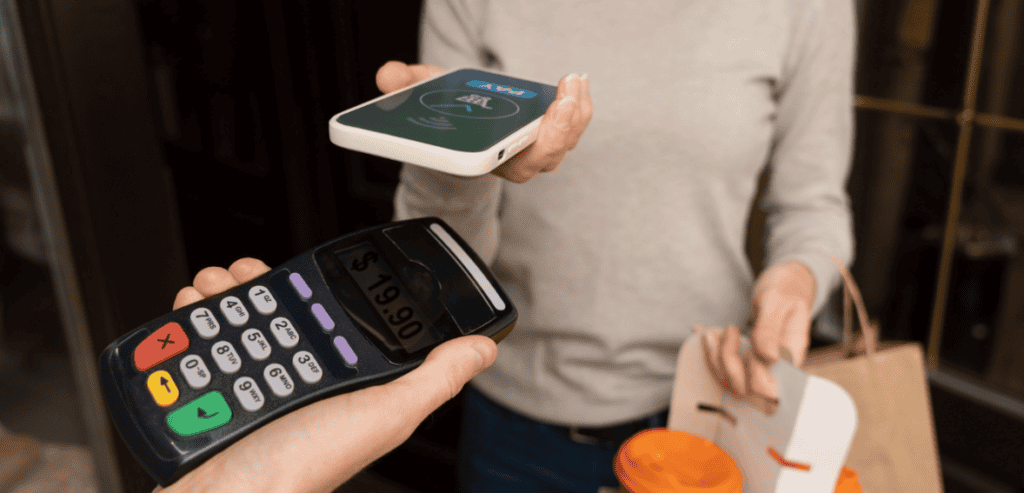
Today’s terminals enable contactless payments, mobile wallets, chips and traditional magnetic strip payment.
A good POS system for an Indiana business must have dependable hardware and software to support its expansion in the future.
Other factors include ease of replacement, software upgrades, remote administration, and compatibility with new technology in payments.
By investing in scalable equipment now, one can avoid future expenses of replacements.
Managing Inventory Across Multiple Locations
Inventory management becomes increasingly challenging as businesses expand. Products move between locations, customer demand varies by region, and stock availability changes continuously.
Multi-store POS systems help synchronize inventory automatically after every sale, return, transfer, or delivery.
Managers gain real-time visibility into stock levels across every location, allowing better purchasing decisions and faster replenishment planning.
Businesses also reduce overselling because inventory updates occur immediately rather than relying on manual adjustments.
Accurate inventory contributes directly to improved customer experiences and operational performance.
Maintaining Consistent Customer Experiences
The customers will be transacting with many business branches throughout their lives. They can buy at one branch today and visit another branch the following week.
The integration of payment and POS systems will help keep the customer information synchronized irrespective of the branch visited.
The use of cloud-based payment management will facilitate the synchronization of customer information as well as cut down the time spent on administration.
The employees will not spend much time validating the customer information since it is already available in all departments. Consistency builds up the customer’s trust and encourages them to do more business.
Better Reporting for Business Owners
Information plays an important role in making decisions in organizations operating through several locations. Information obtained through the preparation of separate reports by each location is slow and takes time.
The centralized check-out system allows you to create unified reporting dashboards containing information about sales, inventory, employees, and payments at all locations.
It allows you to make a comparison of stores’ performance, recognize trends, assess the effectiveness of promotion, and analyze financial results.
Good reporting is essential for strategic planning and improvement of the operation of organizations.
Supporting Employee Management
Managing staff across multiple locations requires standardized processes and consistent operational tools. Employees transferring between locations should encounter familiar systems rather than learning entirely different software.
Modern multi-store POS systems simplify employee management through centralized user accounts, permissions, scheduling integration, and performance reporting.
Businesses also benefit from standardized training because software interfaces remain consistent throughout the organization.
Operational consistency improves productivity while reducing onboarding time for new employees.
Technology should simplify workforce management rather than complicate it.
The Benefits of Cloud-Based Systems
Cloud technology has transformed how businesses manage retail operations. Instead of storing information locally at each location, cloud-based systems centralize operational data securely online.
Cloud payment management provides owners with remote access to business information from virtually anywhere with appropriate authorization.
Software updates, reporting, inventory synchronization, and customer information remain current across every connected location without requiring manual intervention.
Cloud infrastructure also improves scalability because adding new locations typically requires less technical complexity than traditional local systems.
Greater flexibility supports both operational efficiency and future business expansion.
Security Across Multiple Locations
Managing payment security becomes more important as businesses expand. Every location processes customer transactions and handles sensitive financial information.
Retail payment networks should include strong encryption, secure payment processing, access controls, and ongoing software updates that support payment security requirements.
Businesses should also implement employee permissions that limit access according to job responsibilities rather than granting unrestricted visibility.
Consistent security policies across all locations reduce operational risk while protecting customer trust.
Technology should strengthen security without creating unnecessary obstacles for employees or customers.
Planning for Future Expansion
Many businesses initially open only two or three locations but eventually continue expanding. Technology selected today should support future growth without requiring complete replacement.
A scalable Indiana business POS platform allows organizations to add locations, employees, inventory, and payment terminals using the same operational framework.
Businesses avoid disruption because new locations integrate into existing systems rather than requiring separate technology environments.
Planning for future expansion often proves more cost-effective than replacing inadequate systems later.
Scalability should remain an important consideration during vendor evaluation.
Questions Businesses Should Ask Before Choosing a POS Provider
Selecting the right technology requires careful evaluation rather than focusing solely on upfront costs. Businesses should ask whether systems support multiple locations, centralized reporting, inventory synchronization, cloud access, employee permissions, customer loyalty programmes, and future expansion.
They should also evaluate hardware compatibility, payment terminal options, customer support availability, software updates, and integration with accounting or ecommerce platforms.
Understanding these capabilities helps businesses compare providers based on long-term operational value rather than initial pricing alone.
Thoughtful evaluation reduces implementation challenges while improving return on investment.
Technology decisions should support long-term business objectives.
Common Mistakes to Avoid
Some growing businesses continue using separate POS systems at each location because they appear less expensive initially. Unfortunately, disconnected systems often increase administrative work and reduce operational visibility.
Others focus only on payment terminals without considering how those devices integrate with inventory, reporting, and customer management.
Choosing technology based solely on current needs may also create expensive upgrades later as the business expands.
Investing in connected retail payment networks from the beginning often provides greater long-term flexibility.
Avoiding these common mistakes helps businesses build stronger operational foundations.
Conclusion
Managing multiple business locations requires technology capable of supporting consistent operations, reliable payment processing, and centralized oversight. As businesses expand, disconnected systems quickly become inefficient, making integrated POS platforms increasingly valuable.
Multi-store POS systems allow organizations to manage inventory, employees, payments, and reporting through one connected environment. Centralized checkout systems improve operational visibility while simplifying day-to-day management across multiple locations. Strong retail payment networks ensure secure and reliable transaction processing, while an effective Indiana business POS solution supports both current operations and future expansion. At the same time, cloud payment management provides the flexibility and real-time access today’s business owners increasingly require.
Choosing the right POS and credit card terminal setup is no longer simply about accepting payments. It is about building the technological foundation that supports growth, improves efficiency, and delivers consistent customer experiences across every business location. For Indiana businesses planning long-term expansion, investing in scalable, integrated payment technology is one of the smartest operational decisions they can make.